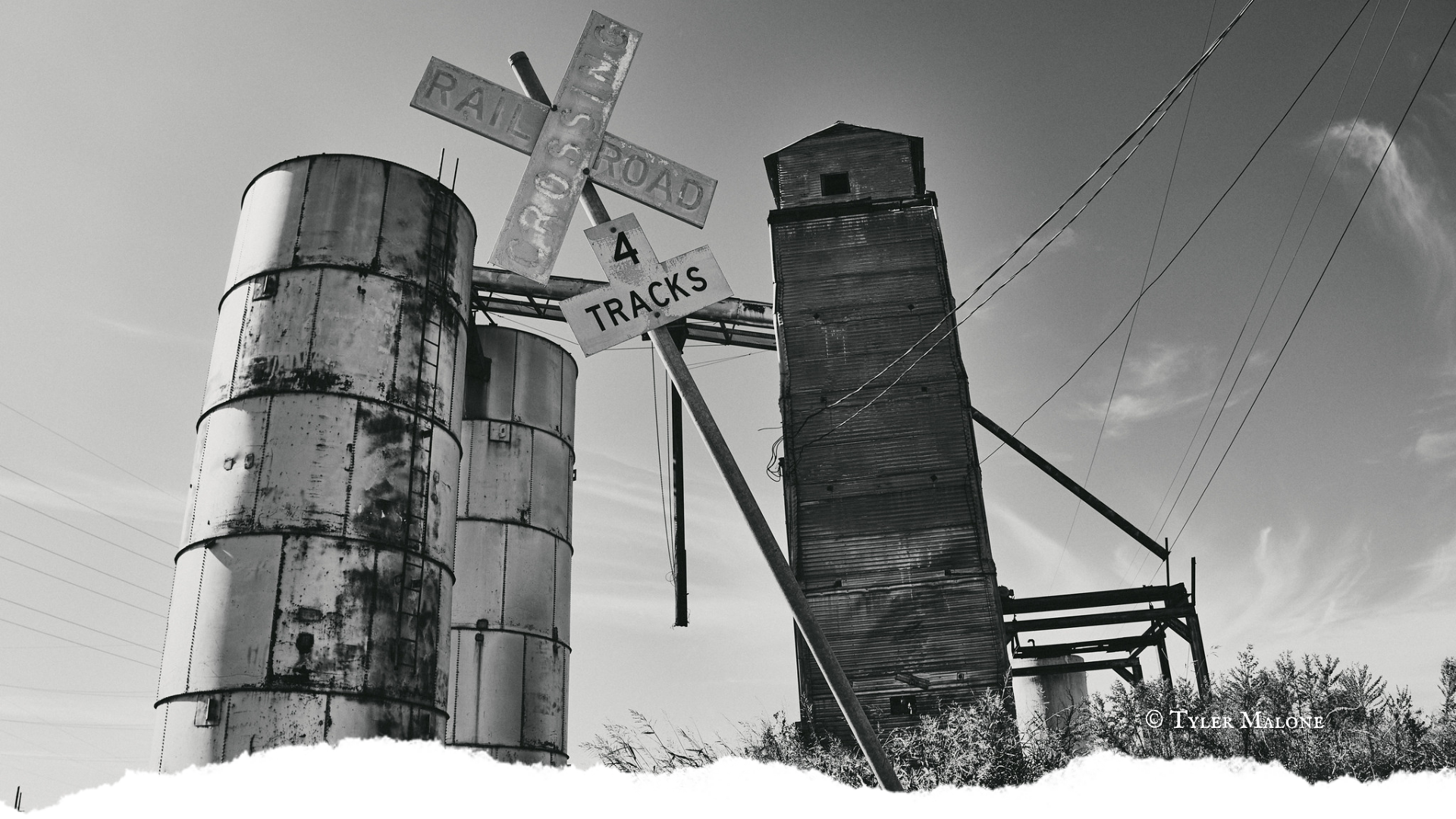
The Day of the Birds
by Noland Blain

Whether to bless the Factory with water or to sweep it off its plot with an earth-soaking flood, the Florida sky was of two minds. Here it shone bright blue; there, it furrowed a dark, cyclonic brow. The spouses may have mentioned something about an umbrella last night, but the men had seen many skies like this dissolve into nothing, and so not many of them took warning on the dawn drive to work. They arrive at the Factory in old pickups that squeal when they brake, or in sensible but grimey Toyotas, or in the car the wife had just returned to the driveway after her own shift at the hospital over in Gadsden. One has a cherry-red convertible. It’s a sweet ride, a vintage one. He drives to work with the top down. It’s the shiniest car in the lot, if only he could keep the geese from shitting on the hood. He ought to hire someone to kill those geese, he thinks, as the Factory gleams into view from between the pines.
How to describe the Factory? Here is a box. It has four sides equal in dimension, and four straight corners. There is the interstate, a stripe of speed across a ditch and two fences. Cars blur past; from their windows, drivers and children see a wall of warm brown wood slats. (Up close, the wood slats are all identical in size and shape and grain.) Seems awfully chic for a Factory, they might think, before the view is replaced by the Forest. They cannot be certain what the Factory factorizes exactly. Certainly it fills boxes inside shipping trucks, which slip onto the interstate through a backroad once their pickup of Products is finished. Those driving the trucks look about as enthusiastic in profile as an old dime.
The other three sides are radiant and white as a commercial for Arm & Hammer. Once a month at nightfall, a man arrives in his company’s van, the logo printed in bubbly blue letters on the side, from which he pulls the powerwasher. It is a big plastic jug with industrial tubes and nozzles, and an engine all its own. His job is to obliterate the dirt off each of these walls with a stream of glassy water and sharp, eye-stinging chemicals. When the ordeal is over, and the man has left and the sun has risen, the white seems to extend a foot out from the wall, a forcefield of clean reflecting off the puddled water, so acerbic and sanitized that, if you were to put your naked hand through it, it might come out sunburnt. If you scuff the wall, you hope no one notices. Is someone watching? There may be cameras somewhere. A month later, the washing man sweeps by in the night, and the wall is clean again.
At first, the walls appear as featureless as a nude inner thigh. If you have ever hung out behind a strip mall, you might have sat on an ugly green transformer box; you may have seen fat pipes vomiting steam, or thundering AC units with a fan spinning crazy inside. Those industrial lawn ornaments, you assumed to be necessary, and it seems you had assumed wrong. None of those things exist on the exterior of the Factory. Instead, the sun bakes an even strip of asphalt surrounding each side of the Factory, bordered by concrete curbs and a little turf lawn, which separates it from the Forest.
On each worker’s first day, they learn to identify the thin gray outlines of doors. The doors possess no handles to try, as though someone had drawn them onto the building. A couple doors have a weak blinking device with a two-inch screen beside it; this is where the workers swipe their cards to enter, and where they shamble out several hours later. The other doors perhaps file into unique chambers of the Factory for someone else to unlock, through mysterious means, and enter. The only exception to the featurelessness is an iron ladder that leads to the roof, but almost no one climbs it.

‘If you scuff the wall, you hope no one notices. Is someone watching? There may be cameras somewhere.’

In the dark before morning, while moths fruitlessly hump the streetlights, the side of the Factory hidden from highway view slides its eyelids open. Those steel lids are where the trucks junction to the building, the loading/unloading dock. Trucks arrive by eight. Their drivers have purple faces, vaguely aware of to whom they are delivering the product, which is to say, Product One. It comes wrapped in sheets of sticky plastic on huge forkliftable palettes. Who’s to say what’s inside? Peering into the plastic is like looking into the larval pod of an insect: edges and corners all but submerged in gluey white. Once empty, the trucks are then loaded with Product Two: hundreds of identical cardboard boxes, stacked optimally. That first product is what the second product is made of. It gives the illusion that whatever process occurs within the Factory—the conveyors like flying carpets, the spidery weaving of mechanical arms, the calculated magic of engineers—takes mere minutes.
If it helps, you can imagine the Product as polyester kitchen sponges or as collapsible silicone tea kettles. A recent product from this company is a skin cleanser beaded with exfoliating particles, and that may be what this particular Factory produces. Regardless, the truck then pulls away to another Factory, or a warehouse, where the Product will sit until an executive decides what to do with it.
While awake, the Factory is a block of blind cacophony. Workers kick machines into gear. The presses hiss with steam; the belts whinny like kept horses; pipes and dispensers slurp and complain like the organs of a body, while buttons, alarms, and the boss, over the intercom or through walkie-talkies, demand attention. He sounds angry again. Then there is the anticipatory climb of foot on metal stair, up to the boss’s office to see what he wants. If you thought it was a magician turning one Product into another to be loaded onto the very same truck it arrived in, you were wrong. No whimsical white beards here except behind special hairnets worn like surgical masks over the ears.
There are some workers that are quite young—a certain college scholarship is offered by the Factory—but many are old, old. The workers are piped in from decrepit farms and dying dairies. Locals, most of them. Their faces are smudgy, difficult to describe. Some are unevenly tanned around their foreheads and necks. One has a deep scrape from a bull’s horn; another, one jaundiced eye. One might tell a story of a sixty-something former coworker who suffered a stroke on the Factory floor, losing his hand in a press. The injured man quit of course. To Hell with this place, he thought. Some of his coworkers quit with him. To Hell with this place, they agreed. A whole corner of the Factory dropped into sleep, the machines handing off parcels and readings to men who will never arrive. A week later, some men did arrive, to replace those who had quit. Some of their faces were the same as those that left a week earlier, purpled by shame and an exhaustion that permeates the muscles.
Ask if the work is hard, and the workers will shrug tiredly. Their skin has gotten tough with hard water, life’s abrasive rub. They are used to pain’s clamp. By far, the ache from standing on one’s feet all day is better than hauling huge logs all day, or slaughtering cows. This exhaustion, however, is different. It lies in the liver, pushes on the intestines and the bladder; it crystallizes in their brain and their feet in round, dull deposits. Some say this is what caused the stroke, but no one can be sure. The exhaustion is a dark syrup in the back of their throats that no homecooked meal can sweeten. Months pass; they work Christmas; a rash bubbles here, a blood vessel tightens there. A Product leaves the Factory; a Product arrives. What is the Product for? For plugging up mole hills, for all the workers care. They have debts and mortgages and lawyer fees to pay after the failed lawsuit. They aren’t buying the damn face cleanser.
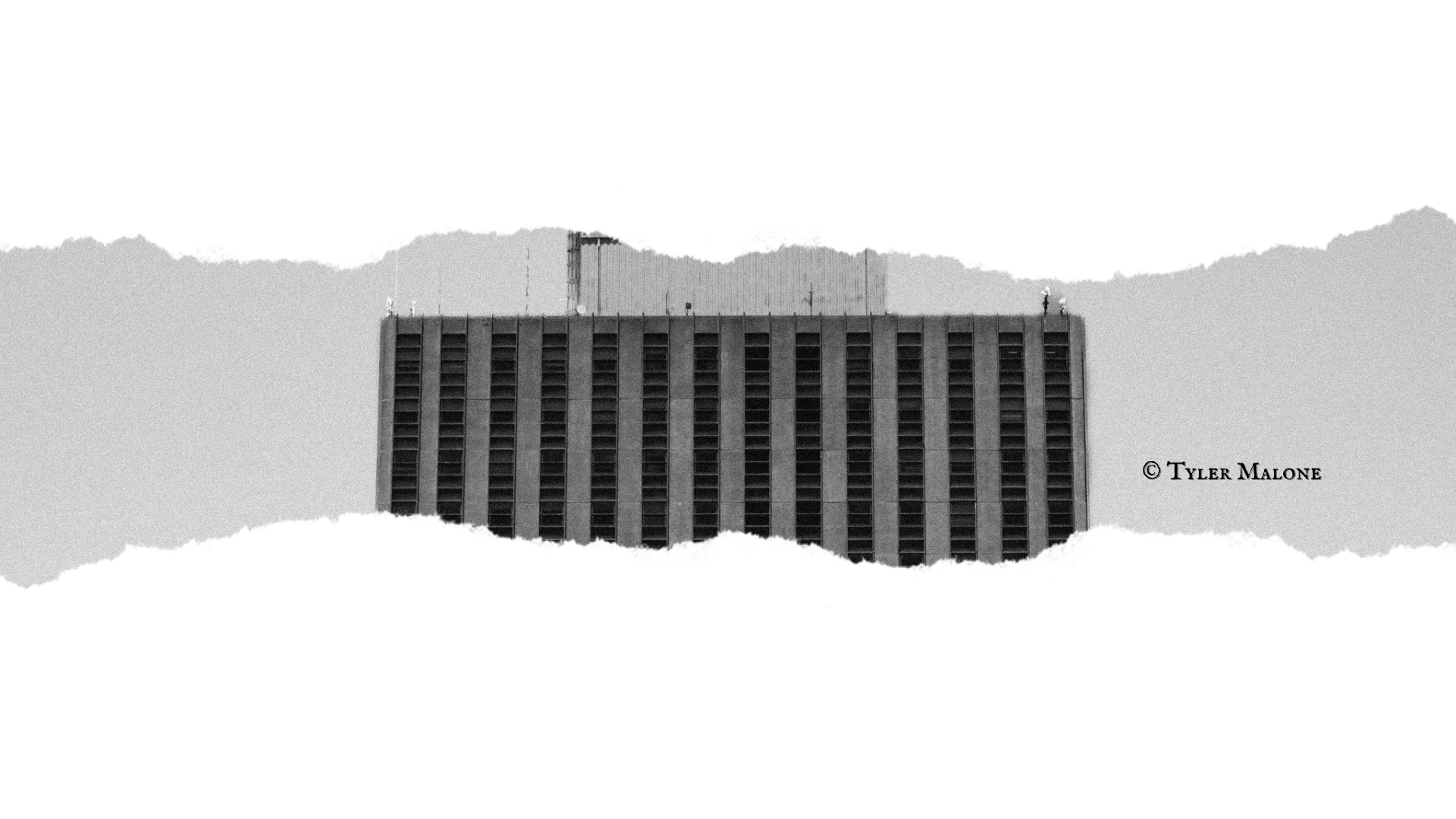
One worker puts his foot on the final stair up to the boss’s office, and he is drenched in dread. Here is the boss. His office is a box of glass, a box hung on the interior corner of the Factory, like a spider’s brooding nest. This is where he sits and dines on sour foods: olives from the jar, salads ridged in kale. He breathes shallow, sour breaths—the workers speculate an injury, a life of salt, smoke, muscle left to laze. His hands are leathery with callouses, with a tendency to knot into fists and slam down on his nice desk, punctuating his words, his words which are lashings equally mean, confused, and final. His ownership of this office means he can lay the anchor of your life or completely sink it: give you wages or give you the day to turn in your locker key. If there was ever conviction in his commands, now there is simple weight, dumb and dangerous as navy rope where they fall across the factory floor.
After he says whatever he will, the worker slumps out, and the boss breathes heavy breaths. A darkness has settled in his blood. Thickened the walls of the veins in his neck. He looks at his exquisite desk through a smoky filter of red, and considers his underlings to be the source of his exquisite suffering, somehow. He chews an olive and looks out his glass box. They quiver at their machines like beads of blood. He pictures a strong, proud forklift rising out of the neighboring Forest, with smooth leather seats like the ones in his convertible. He pulls the lever of the forklift, huge enough to scoop the whole Factory up by its foundations, letting the little employees and their packages rattle around inside. Everyone’s getting a raise! he says to no one, before dropping the whole place upside-down into oncoming traffic.
But the fantasy exhausts him. He reaches beneath his desk for the ridiculous crystal vase amber with Jack, though to anyone who asks, it’s Johnny Walker. He has emails to send, executives to answer to—and he will, with thank-yous and no-worrieses wrenched from his hateful fingers. Better to have sedation with his submission. Does he have in him one more lunge up the corporate ladder? There is an awful tinge beneath his eyes that baffles the doctor, the color of a squashed bug. To Hell with this place, he mumbles. Hell, to him, has four sides and faux wood paneling. It sits dumb against a stripe of loud interstate. It has a former pine farm on the other three sides.
Here is the Forest. More accurately, a former pine farm. Before the pine farm, it must have been marshland, mud-smelling and writhing with glistening pound-heavy frogs. The frogs ate dragonflies and the idle mosquito; the birds ate the frogs. The birds moved like enchanted lanterns: glinting and bending on lithe, soundless feet. Back then, they came in an arabesque of colors, plucked from a medieval depiction of Eden. A heron’s blue could make a noon sky seem drab. Their prey hovered beneath a film of silty water, moved—the beak struck and gobbled. And the marshland knew such arresting weather. Lightning cracking the sky like a window, through which pounded rain, then sunlight, strange and diaphanous. It was a world of curtains, a world of music. Cicadas sang. Somewhere gurgled a hungry bull gator, sensing the crowd of ibises drying their gold wings on the wind.
Well, men found it, and the men changed it into something more useful. Swamp oak was bad wood; best grow pines, and grow them in rows. That will make us gobs of cash, a man said to his family, moving them all into a tin cabin on the outskirts of a new-bought plot of garbage land he swore to mill into riches. He had been taught how to tame a forest by his own father: first, the swamp had to be filled; then, the saplings sown; signs and fences erected on stakes; birds, screaming for no good reason, shot down and cooked. The meat was tough and not worth the bullet, and the migratory geese, he couldn’t stop from returning whenever they pleased. But the other maintenance, he relished, hiring men to do the needle collection (for use as fertilizer; they were lost profit just sitting there), and the eventual harvest when it would come. The trimming work, the man did himself; it thrilled his nose and mind with the smell of cut weeds and sweet sap.
But men get old; and old, exhausted men make mistakes in money. Trimmings became less routine, though the trees continued to creak in wait for that inevitable harvest. The birds that flew through sensed a sort of sterility about the place and flinched away. Seasonal rain came and went and dripped down the trunks, pooling in the pines’ red shadows, decades of pine needles woven together like a mat, no longer collected and sold off. Strange things began to dream in that dense dead fabric. If you had been there, using an intense magnifying glass since you are so nosy and prepared, you would have seen specks of dust—springtails and mites, nothing more than mouths on legs—silently chewing and roving and dying. Spiders eat the springtails. Millipedes consume the mites. Small gray mushroom caps pop up like question marks: no blades? no blades? no blades?
The pines grow beards of lichen and fuzzy, stubbly moss. Palmettos emerge from their bright orange cones, long buried in near-fossilized dung. Ferns and vagrant saplings settle down in villages within the rows. The rows remain. Puddles become freshwater shallows for insects to lay their young, and for frogs to lick their wet lips inside. Rodents open the hatches of their burrows, chased by snakes. The rows remain. Birds come to eat the rodents and the frogs and the lithe green lizards. The rows remain. They are like dark corridors left over even when the castle is toppled.
Meanwhile, the old man and his family lived in the tin shack. The rain fell like nickels on the tin roof. The rain was the worst. Couldn’t sleep through it, couldn’t drive through it. When the rain stopped, the birds blared their morning songs. It would drive anyone to kill or to sell.

‘The birds moved like enchanted lanterns: glinting and bending on lithe, soundless feet. Back then, they came in an arabesque of colors, plucked from a medieval depiction of Eden.’

Here are the birds today. They are slender, pale, and peer from a corner of the vast property on which the Factory sits, a corner that, while the trucks roar in and out, while the men arrive and leave, has begun to sag with dark water, like a tarp left out in the rain. A cypress, too big to remove and too deep its roots, juts up its knees. Its shade rains down. An old egret patrols between. She lifts one elaborate leg up from the water and slides it soundlessly down. She is the oldest bird around. She gobbles the tadpoles of wood frogs, the occasional garden snake.
For a few hours every night, the loading/unloading dock is slid closed. There are a few hours of peace. Late-night cars and the occasional Greyhound sweep their headlights over the road, and some of the light surprises the water, quite still. This is usually the hour that the washer man is scheduled to arrive, as are the landscaper, the utility man, and the lunatic calls of the nightbirds. The washer man’s van cruises in through the backroad. From his passenger-side window, you might catch a glance of the geese sleeping in dark piles on the grass. Looking closer at that corner, you might notice how the fence has warped and fallen in, or how the pool of water has stretched into an L-shape along the property’s edge, spilling from the forbidding pines. Are these the forces at work to make the Factory tilt slightly, the way one worker swears it does?
The washer man contemplates the birds as he dismounts. Are those the birds—he sees the egrets huddled in the wet corner, dark but outlined by an orange streetlight’s weird glow—are those the birds that make his job so damn difficult? The roof is white, but it is filthy-white, speckled in black wads of half-digested grass. No one else ever sees this fifth side of the building. It is where that hideous box transformer is, and the thumping fan. Pipes drool upward their wavy, warm air. The washer man and the utility man are the only ones who know that a building can seem futuristic from ground level even with a roof caked in shit. The smell up here is dense. The washer man comes each month to wash the walls, but only twice a year to spray the roof, and each time, he loathes the messy, awful-smelling process: the climbing up to the roof in the first place, the accordion of black tubing he must carry, the leaks that spring from the plastic jug containing all the water and the chemicals, and the white goop that winds up on the undersides of his shoes, staining the ladder on his way back down. Just great. He sees the roof and the long iron ladder and thinks he ought to quit. The ladder is encrusted with yellow weeds. There’s a skirt of them around the Factory, where its sleek white walls meet a seam with asphalt. They are sickened from the washer man’s chemicals. Every so often, a rainstorm gives them the wrong idea, and they forget they are tired and doomed and that the wall has no footholds. Getting rid of them is the landscaper’s job, but they haven’t hired a new one after the last one quit without an explanation. The washer man climbs up anyway, holding his breath. To Hell with this place.
The birds see the silly man with his boa constrictor of black plastic tubing, and they laugh. At night, this laughter is alien, such that it might as well be women shrieking. By the morning, they are still laughing, long after he has gone and long after the sound has lost the mirthful quality of laughter and has become frightening. Wood frogs inflate their throat sacs to join the ceremony.
It has become so noisy, the geese think. They watched the washer man curse, folding up his instruments and driving off. Now that dawn has risen, and the sky has divided itself into yellow-green and dark black, they hurry up their morning gobbling of clover and dandelion because the rain is coming. They are not from here. Just visiting. Don’t know what that washer man is upset about, they think, but he has the right idea to get going while the going’s good, since there’s never been a storm so obvious as this one. The geese stir up, their wings billowing like sheets. The young geese, no longer sock-puppet goslings, have just enough lift in their new wings to follow suit. A V of them passes over the Factory. From above, the land is a strange interruption: acres of pine, then the white box, then more acres of pine.
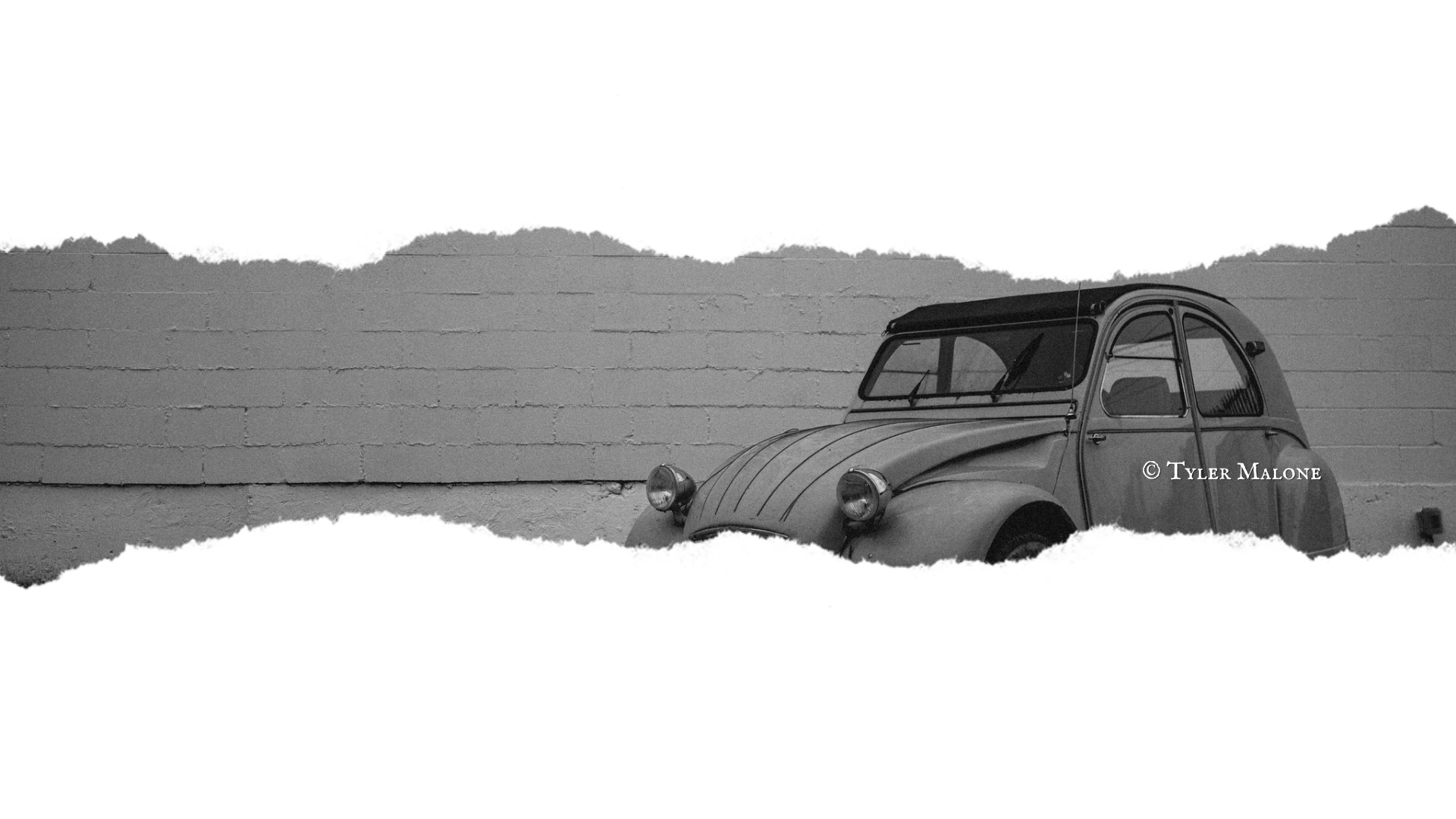
The wood was not ancient at all—its memory spanned mere decades, not centuries—but it had begun to feel ancient before a rectangular chunk of it was sold. Imagine it: since you are the type to walk around in places you are not allowed, you are the type to come through a channel of blue woods, following a bizarre, hot smell—and here is the flat plain of naked brown dirt, a clearing open as a wound. The devastation barely fits inside your eye: it stretches so far that the trees on the other side of the clearing are blurs. The sky is a blue rubber mallet that strikes you in the chest, and you cannot breathe, or you can, but only through the thin exhaust baked into this dry, nutrient-less soil. A rope of rainwater has collected over there, in a ditch, but it is in the wrong spot, and it is the wrong water, suffocating instead of nourishing—it is acid water. Oil thin as a breath lingers on its surface.
Every tree along the edges of the Factory’s property, loblolly-bay to gargantuan cypress, is lightly tattooed inside with a dark ring inside a chain of concentric pale ones. They had almost forgotten, in the decades past, that a harvest was coming. The violence was expected; its quickness was not. In less than sixty days, it pulled up an exact rectangle of forest like a bandage torn from a hairy leg. Sap exploded and boiled on the machines’ hot mufflers. They scoured the dirt so thoroughly that it seemed no life had ever existed there—a fragment of desolate Mars in the middle of a verdant Earth—so that the Factory could be built in another sixty days, flat and featureless, seeming to have been sliced off a stack of identical factories.
After the geese flee, the egrets know next what to do. Waterbirds, they don’t care about getting too wet; they know they can always dry off. They’ve seen plenty of storms and weathered them all. The herons—great white ones with stark eyeliner, black herons with indigo feet—all the fishing birds gather in the tall branches of the pines, where the pine needles, like a dense coat of green fur, will protect them. The oldest egret flies on aching wings to a low branch. It is where she has her nest. She sits on her memories, warming them. In one memory-egg are the logging machines. In another, the flat, thirsty land. The third egg is full of blood. The fourth is her mother. The fifth is another machine. She counts them and recounts them.
About twenty miles out, the truck driver hears about the storm from his buddy down south, who radios in about a wave of bad weather. He has to get his load delivered, but it will have to wait—with the speed he’s going, the weight he’s hefting, a half-inch of water could turn the interstate into a slide toward death. Those roads have bad drainage anyway. The ditches always brim. There’s a truck stop nearby where he can watch the rainstorm come through, and there’s a convenience store too, where he can get a hot dog.
From her perch, the old egret watches the skittering animals all go quiet. Rodents dash into their burrows. Frogs pretend to be stones. Slugs and snails find cracks in bark to cling to. All around, bays and cypress turn the waxy sides of their leaves down, the powdery gray sides up, toward the sky. Palmettos rustle their spread hands together, as if they are psyching themselves up for the wet wind arriving, and that is the only sound: a low, papery anticipation. Distantly, there is a lightning strike slicing the horizon, thunder resounding two seconds after. A not-too-distant beach. A shot-through palm. The palmettos shudder, clamor, thrilled. The rain approaches. It is cold and clear. A heavy downdraft swings it down. It arrives like a hammer. The rain is here. The sun is weak, watching through a rag of cloud. The rain is here, is here, is here.
Below the gathered birds, there is the Factory, a white island on asphalt. It is pelted by water. The water is thick as glass beads. Inside the Factory—did anyone warn the Factory?—it isn’t the boss who hears it first, pouring out a third helping of Jack into a tumbler; it isn’t the workers on the floor, either, surrounded by their loud machines. The loading bay doors are thin, thin; the man on the forklift hears the water roar, and keeps on working. A truck will arrive anyway, he thinks. They always arrive so he should be ready. In his mind, the truck drivers are a cog with its teeth locked to him, also a cog, which in turn connects to a bunch of other wheels and belts, and the whole mechanism moves continually from early morning to late evening, rain or shine or even snow, if that would ever happen in his lifetime, he scoffs, pulling the lever to lift a pallet, only to place it somewhere else. It’s only rain, rain, rain.

‘The oldest egret flies on aching wings to a low branch. It is where she has her nest. She sits on her memories, warming them.’

The Factory’s white walls are revealed to be ordinary, at once dingy, through the screen of rain. The rain runs in rivulets down it—if it has gutters, they are ineffective—and finds the opening between the asphalt and the walls, held open by the stubborn, poisoned, reaching weeds. The rain washes their handlike leaves clean. The rain finds the chemicals themselves and divides them, dilutes them, carries them away. The rain creates rivers, crashing white where they meet curb, steering down and down, away from the Factory, into the drainage ditch between it and the interstate. The interstate is gauzy and gray. The drivers may as well navigate through a sheet of gray silk studded in red sequins, the astigmatized brakelights of the lost cars in front of them. Layers of water ascend and fall as they careen forward blindly. The interstate is an eerie music of shhhhhhhhhhh to a drumbeat of droplets on metal roofs and windshields.
As if summoned by the music, a man appears in the gray doorway of the Factory. His watch says it is six o’clock, though the rest of the world has not seemed to notice. The sun has been sliced into a thousand pieces. Oh, it is raining. The rain is between him and his car, somewhere out there in the lot, hidden by water. He runs out to meet it, soaked instantly to the skin. Should have listened to the wife. The water smells like zinc. Another man appears and follows suit. Another and another: they appear and look up, around, and decide to brave the water and get home quick, even if they get home wet and on-edge.
By the time each man arrives at his car, he is running—all thoughts of clocks and times left behind, dissolved and carried out by a river into a drain and flushed out and away—he is running though his muscles, moments before, were blocks of granite. He gets to the car and slides into the seat and closes the door without starting the engine. Just sits. On shabby upholstery. Watching the gray silk ripple. The drumbeat. The distant shhhhhhhh.
Here is the boss. Last one out, as always. He grips the frame of the door to keep from swaying, and he seethes at the rain. He wishes it steam, he wishes it boiled off already. He imagines his cherry-red convertible in the spot nearest to the Factory, but still yards away. The boss has a fragment of olive in his teeth, and it fills his mind with brine. He kicks off and runs, rain stinging with velocity. It feels good! he thinks. Rain! His button-up gets dark, clings to his body. The rain is cold! The rain is nice! Rain rain rain keep raining! he sings in his head. Sometimes he slows down to a gallop, thinking he is going to vomit, but then he remembers rain! rain! and keeps running through the sweet mist. His feet are slow, as though there are flippers attached. He kicks up a gallon of water with each footfall.
His shoe catches on the rung of a storm drain and he almost falls hard. The crystal vase he had been clutching all this time flies through the air and shatters, the sound muffled, the shards skidding away and vanishing. He looks up and has lost his direction. Which way is the lot again? Which way the Factory? The water is mixing with snot because he is so cold and suddenly lost, lost, lost, and he imagines a liquor store, the one by his house, and the handle of whiskey he’ll buy once he gets home. When he does find his cherry-red convertible he discovers it has no roof, that he left the top down this morning, that there’s no way the engine will start, that the upholstery will have to be torn up and replaced and how that will cost money, and has he left his wallet in his office? patting his thigh pocket and his back pocket all soaked. Even with all this water thick as wool and clouding his eyes and his nose and his ears, he can see there is someone sitting in the passenger seat. Their color is like a lithium lantern held out for him to follow. It is not a someone; it is not sitting. It stands on long, exquisite legs, wings folded tightly into its body as though there was no weather it could not predict nor withstand: an elegant, stately bird, unbendable as the crack of a whip. Her pupils are small and hard as jades. Her beak is the color of the rain.

Noland Blain (he/they) is a writer and library worker from Jacksonville, FL, currently pursuing a Master's degree in Archival Studies at University of British Columbia. Their work can be found in Black Fox Literary, SAPIENS, Funicular Magazine, The Kudzu Review, and elsewhere. They can be found on Instagram and Bluesky.
